
The Journey of Carol Dweck
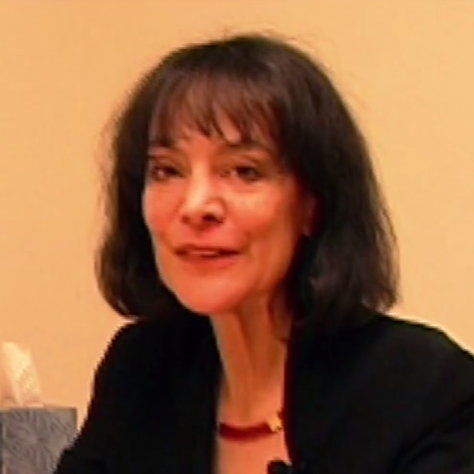
As a young researcher, Ms Dweck brought children into a room one at a time and gave them puzzles — easy ones first, then hard ones — to watch how they coped with failing.
She expected some children to cope better than others. That is not what she saw.
Confronted with the hard puzzles, one ten-year-old boy pulled up his chair, rubbed his hands together, smacked his lips, and cried out, “I love a challenge!”
What’s wrong with them? she wondered.
I always thought you coped with failure or you didn’t cope with failure. I never thought anyone loved failure.
These children were my role models.
Carol S. Dweck, Mindset: The New Psychology of Success, updated edition (New York: Random House, 2006/2016), chapter 1, “The Mindsets”.
Ms Dweck wanted to understand
the kind of mindset that could turn a failure into a gift.
What she saw in students who loved a challenge.
Dweck, Mindset, chapter 1. Her words: “I was determined to figure it out—to understand the kind of mindset that could turn a failure into a gift.”
The problem:
a belief that ability is fixed.
Ms Dweck found that people carry one of two quiet beliefs about ability, and that the belief shapes everything that follows.
In a fixed mindset, ability is a fixed quantity you either have or don’t. Effort is evidence you lack it, and every hard problem is a test you might fail.
In a growth mindset, ability is something that can be developed. Effort is how it happens, and a hard problem is where the growing gets done.
In a classroom, what the educator holds is only the start of it. What reaches the student is what the educator does:
…pass on a growth mindset not by having a belief sitting in their heads but by embodying a growth mindset in their deeds: the way they praise (conveying the processes that lead to learning), the way they treat setbacks (as opportunities for learning), and the way they focus on deepening understanding (as the goal of learning).
…set high standards for all their students, not just the ones who are already achieving.
And she is blunt that high standards, on their own, are not the answer:
…simply raising standards in our schools, without giving students the means of reaching them, is a recipe for disaster. It just pushes the poorly prepared or poorly motivated students into failure and out of school.
She then asks the question this whole site is an answer to — is there a way to set standards high and have students reach them? — and answers it:
The growth mindset gives you a way to set high standards and have students reach them.
…with the growth mindset brought many low achievers up into the high-achieving range.
Dweck, Mindset, chapter 7, “Parents, Teachers, and Coaches: Where Do Mindsets Come From?” The quotations are partial where the sentence names “great teachers” as its subject; the words within them are unchanged. The last is her own summary of the Rheinberg study, cited in full below.
All of the above begs for a school system which, as educators come and go, reliably gets a growth mindset inside each student, so they are able to reach the high standards.
Guidance from many,
including Binet, Rheinberg — and Marva Collins.
Alfred Binet
the inventor of the IQ test
The test was never meant to fix a child’s intelligence in place. Binet built it to find the children the Paris schools were failing, so that something could be done for them. On the idea that intelligence is a fixed quantity, he wrote:
We must protest and react against this brutal pessimism….With practice, training, and above all, method, we manage to increase our attention, our memory, our judgment and literally to become more intelligent than we were before.
Alfred Binet, Modern Ideas About Children, trans. Suzanne Heisler (Menlo Park, CA: Heisler, 1975; original work 1909), quoted in Dweck, Mindset, chapter 1.
Falko Rheinberg
a researcher in Germany
Mr Rheinberg tracked schoolteachers by the belief they held, then followed their students through the year. In the classrooms of teachers who believed ability was fixed:
the students who started the year in the high-ability group ended the year there, and those who started the year in the low-ability group ended the year there.
In the classrooms of teachers who believed ability could be grown:
It didn’t matter whether students started the year in the high-or the low-ability group. Both groups ended the year way up high.
The group differences had simply disappeared under the guidance of teachers who taught for improvement.
Read that again. The gap closed — because of something as ephemeral as what is in our minds — which the Lead Out Method changes with Inner Educational Exercises.
Falko Rheinberg, Leistungsbewertung und Lernmotivation [Achievement Evaluation and Motivation to Learn] (Göttingen: Hogrefe, 1980), 87, 116; also reported at the conference of the American Educational Research Association, Seattle, April 2001. Quoted in Dweck, Mindset, chapter 3.
Marva Collins
and the classroom Ms Dweck chose as her example
When Ms Dweck needed to show what this looks like in a real room, she reached for a teacher in Chicago whose classroom was, for many of her students, their last stop.
Marva Collins took inner-city Chicago kids who had failed in the public schools and treated them like geniuses.
These children hadn’t learned much in school, but everyone knew it was their own fault. Everyone but Collins.
Ms Dweck reports what followed: four-year-olds reading by Christmas, seven-year-olds reading The Wall Street Journal, and grade-schoolers working through Chekhov, Chaucer’s Canterbury Tales and always Shakespeare. Her verdict is a scientist’s, not a fan’s:
Whether you measure these children by the breadth of their knowledge or by their performance on standardized tests, their minds had been transformed.
But transforming their minds came first.
Ms Collins educated, to get students nside – what they need to succeed (transformed minds)
 utside – at school, in real life.
Dweck, Mindset: “took inner-city Chicago kids” and “their minds had been transformed”, chapter 3; “Everyone but Collins” and the reading list, chapter 7. Ms Dweck’s own sources for the classroom are Marva Collins and Civia Tamarkin, Marva Collins’ Way: Returning to Excellence in Education (Los Angeles: Jeremy Tarcher, 1982/1990), and Marva Collins, “Ordinary” Children, Extraordinary Teachers (Charlottesville, VA: Hampton Roads, 1992).
Steps to success
1. Followed the children who loved the hard puzzles — instead of dismissing them as odd — and spent a career finding out what they knew.
2. Named the two beliefs — fixed and growth — and showed, in study after study, that the belief changes the outcome.
3. Wrote Mindset in 2006, putting thirty years of research into language an educator or a parent could actually use.
4. Corrected her own readers. When she saw her work being misapplied, she added a section to Mindset called “False Growth Mindset” and said so plainly:
Some parents, teachers, and coaches were indeed misunderstanding the mindset ideas.
Many people take what they like about themselves and call it a “growth mindset.”
We should never think that praising a process that is not there will bring good results.
Dweck, Mindset, chapter 7, “False Growth Mindset” — a section she added for the updated edition, as she explains in its preface.
That is what a careful scientist looks like — and it is why the rest of her work can be trusted.
The stakes
IF Ms Dweck succeeded
THEN we would know that a student written off at seven is not finished — and that what an educator believes about a child changes what that child becomes.
IF Ms Dweck failed
THEN sorting children early by measured ability would be sound practice, and Ms Collins’s classroom would have to be explained away as a miracle.
Did Ms Dweck succeed?
Yes.
Mindset remains a bestseller and has been translated into more than twenty languages. Ms Dweck was elected to the American Academy of Arts and Sciences in 2002 and to the National Academy of Sciences in 2012. She has received the American Psychological Association’s Distinguished Scientific Contribution Award, the National Academy of Sciences’ Atkinson Prize, and the inaugural Yidan Prize for Research in Education. She has addressed the United Nations.
She is, by any measure available, a credible witness to the idea:that students must getnside – what they need to succeed (including a growth mindset)utside – at school, in real life.
Have districts put it to work?
Not yet.
Twenty years after Mindset, the school system still sorts children by measured ability and still moves the whole room at one pace, ready or not. Ms Dweck showed that the gap between ability groups can close. The system is not built to let it.
This is a matter of how the school system is run — not of how hard teachers work.
Putting it to work would require the school system to shift its priority away from follow the schedule, next lesson — and that means the new priority of the Lead Out Method:
Getting students inside what they need to succeed.
Honours as listed on Ms Dweck’s curriculum vitae, Department of Psychology, Stanford University: elected to the American Academy of Arts and Sciences, April 2002; elected to the National Academy of Sciences, 2012; Distinguished Scientific Contribution Award, American Psychological Association, 2011; Atkinson Prize in Psychological and Cognitive Sciences, National Academy of Sciences, 2016; Yidan Prize for Research in Education, inaugural laureate, 2017; Invited Address, United Nations, January 2015. Sales and translations: “Carol Dweck: Recipient of the 2018 SAGE-CASBS Award,” Center for Advanced Study in the Behavioral Sciences, Stanford University, 2018, which reports twenty languages as of that year.