
Classroom proof — Marva Collins
Marva Collins got spectacular results by addressing The Beautiful Problem.

The Beautiful Problem:
How to get students  nsidewhat they need to succeed?
Why haven’t others copied Ms Collins’s success?
Unlike Ms Fugitt, Ms Collins became nationally famous:
- Two 60 Minutes documentaries
- A movie starring Cicely Tyson, The Marva Collins Story
- Two books: Marva Collins’ Way and Ordinary Children, Extraordinary Teachers
- A presidential award from George W. Bush
So again, why haven’t others copied her famous success?
Even other teachers in the school Ms Collins expanded into were not able to replicate her success.
In complete sincerity Ms Collins would say:
There is no secret.
I’m just a teacher.
I work hard and have a positive attitude.
These were Ms Collins’ honest answers.
But this was decades before the science arrived to explain what she was actually doing.
There was little available for others to copy.
In 2006, Stanford psychologist Carol Dweck published Mindset: The New Psychology of Success, using Marva Collins as an example of what science now knows to be effective.
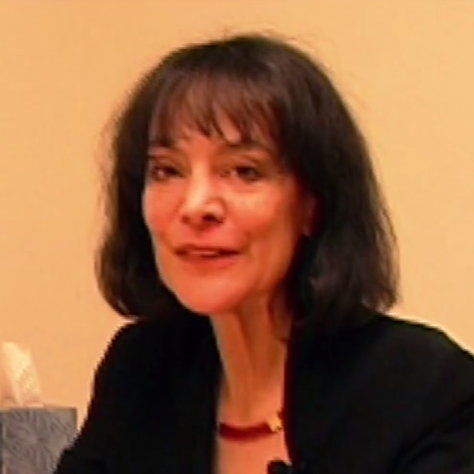
Below is the process Ms Collins used to successfully solve The Beautiful Problem — without ever distinguishing between educating and learning.
§
The Journey of Marva Collins
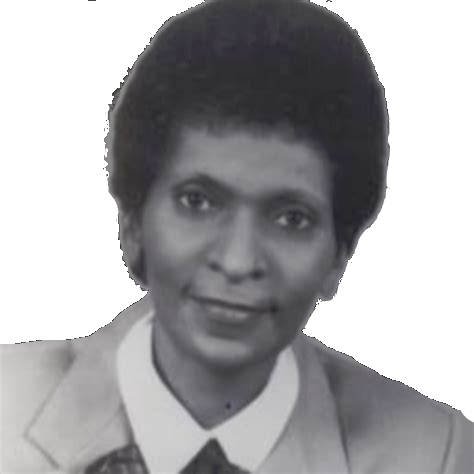
Ms Collins was gifted with the ability to recognize children’s growing ability to self-direct their own lives;
Used literature and what she called “sermons” to exercise students’ budding independence.
Marva Collins wanted
students to succeed in school & life.
The problem:
too many students had given up on themselves – had lost hope.
The guides:
Emerson, Thoreau, Tolstoy, Shakespeare and others.
For example,
from MARVA COLLINS’ WAY by Marva Collins and Civia Tamarkin:
At the start of the school year Ms Collins hands out excerpts from Ralph Waldo Emerson’s essay on Self-Reliance, saying:
The first thing we are going to do in here, children, is a whole lot of believing in ourselves.
Later saying:
Now self-reliance means to believe in yourself.
After discussing Self-Reliance and the life of Emerson, when Ms Collins asks Tanya “What does Emerson tell us to do?” Tanya answers:
Trust ourselves.
“James, what does Emerson tell us to do?” James answers:
Trust ourselves.
And Ms Collins trusted — knew — her ability to elicit student success, saying at the start of the school year:
None of you has ever failed.
School may have failed you.
Well, goodbye to failure, children. Welcome to success.
You will read hard books in here and understand what you read.
You will write every day so that writing becomes second nature to you.
You will memorize a poem every week so that you can train your mind to remember things.
“But you must help me to help you”
If you don’t give anything don’t expect anything.
Success is not coming to you, you must come to it.
Steps to success
1. Instill hope and evoke the will every day – with “sermons” and affirmations.
2. Prove to students they can read hard words – using diacritical marks and phonics.
3. Use repetition to build positive identify and wellness – with “sermons” and questions causing students to recognize their own power.
The stakes
IF Ms Collins succeeded
THEN students would have hope, wellness and apply themselves.
IF Ms Collins failed
THEN students would remain discouraged and would not realize their natural gifts.
Did she succeed?
Yes — spectacularly.
Reading far beyond their years
Chicago Sun-Times writer Zay Smith: Collins and Tamarkin, Marva Collins’ Way, 160.
Years later — the lives behind the reading
Predicted for a cohort like hers
- 1 murdered
- 2 in prison
- 5 on welfare
Ms Collins’s students
- All alive
- None in prison
- None on welfare
They grew up to thrive as adults — working, running businesses and non-profits, studying to become attorneys.
“Too Good to Be True,” 60 Minutes, CBS, 1995.
What made the difference
Ms Collins began each day by evoking the will — growing their wellness, their hope, their self-reliance, and their perseverance.
Throughout the day Ms Collins was opportunistically educating, getting students to listen to themselves, trust themselves and to realize their own ability to act, self-directed.
That is exactly what the science now confirms: children succeed when we develop the inner capacities — self-belief, self-direction, perseverance — that a same-pace system never sets out to build. See how the science confirms it →
In essence, Ms Collins was solving The Beautiful Problem
The Beautiful Problem:
How to get students nsidewhat they need to succeed?