
The Journey of Angela Duckworth

Ms Duckworth, a MacArthur Fellow — often referred to as the “Genius Grant” — was frequently told by her father, “You know, you’re no genius!”
Source: Angela Duckworth, GRIT: The Power of Passion and Perseverance (preface, p. xiii).
She left a well-paid position at the global management consulting firm McKinsey & Company — to teach in public schools for five years.
Subsequently, she started a PhD program at the University of Pennsylvania, where she conducted research and later joined the faculty.
Ms Duckworth wanted to know
why some students succeeded while others did not.
And how do we help all students succeed?
The problem:
talent wasn't a great predictor of success.
From her experience teaching, she noticed that talent wasn’t a great predictor of success.
What did?
She learned of the “Beast” — what West Point uses to weed out candidates for military leadership.
The day begins at 5:00 a.m. By 5:30, cadets are in formation, standing at attention, honoring the raising of the United States Flag.
Then follows a hard workout — running or calisthenics — followed by a non-stop rotation of marching in formation, classroom instruction, weapons training and athletics.
Lights out, to a melancholy bugle song called “Taps,” occurs at 10:00 p.m.
And on the next day the routine starts over again. Oh, and there are no weekends, no breaks other than meals, and virtually no contact with family and friends outside of West Point.
Source: GRIT, p. 4.
Who makes it through Beast?
Working with Mike Matthews at West Point, she discovered the Whole Candidate Score:
a weighted average of SAT or ACT exam scores, high school rank adjusted for the number in the applicant’s graduating class, expert appraisals of leadership potential and performance on objective measures of physical fitness.
Applicants to West Point start the process in the junior year of high school.
Source: GRIT, p. 3.
And yet, one in five cadets will drop out before graduation. What’s more remarkable is that, historically, a substantial fraction of dropouts leave in their very first summer.
Who spends two years trying to get into a place and then drops out in the first two months?
Guidance from many,
including Martin Seligman.
Martin Seligman
From ppc.sas.upenn.edu
Dr. Martin E.P. Seligman is the Director of the Penn Positive Psychology Center and Zellerbach Family Professor of Psychology in the Penn Department of Psychology. He is also Director of the Penn Master of Applied Positive Psychology program (MAPP).
He was elected President of the American Psychological Association (APA) in 1998, during which one of his presidential initiatives was the promotion of Positive Psychology as a field of scientific study. This initiative spurred a dramatic increase in empirical research on human well-being, and as a result there is now a deeper and broader base of science-based knowledge of human happiness and well-being. This knowledge has enabled the creation of practical interventions that demonstrably increase well-being, including interventions in positive education and positive psychotherapy. His primary aim as APA President was to bridge science and practice so both might flourish, a goal that has been paramount throughout his life as a psychologist. Since 2000 his main mission has been the promotion of the field of Positive Psychology.
He is a leading authority in the fields of Positive Psychology, resilience, learned helplessness, depression, optimism and pessimism. He is also a recognized expert on interventions that prevent depression, and build strengths and well-being. He has written more than 350 scholarly publications and 30 books.
Steps to success
1. Quit a highly paid consulting position at McKinsey & Company and spent 5 years teaching in public schools.
2. Became a researcher in a PhD program at the University of Pennsylvania, focused on the key to success.
3. Found candidates for study — including Beast at West Point, national spelling bee winners and others.
4. Interviewed leaders in business, art, athletics, journalism, academia, medicine and law: Who are the people at the very top of your field? What are they like? What do you think makes them special?
5. Developed and tested the Grit Scale — which proved far better than academic results at predicting success.
The stakes
IF Ms Duckworth succeeded
THEN as a society we would know where to focus our efforts and schools would improve.
IF Ms Duckworth failed
THEN we would be left with an unanswered question, and still not know what matters for student success.
Did Ms Duckworth succeed?
Yes.
Ms Duckworth successfully proved that grit is more powerful than talent.
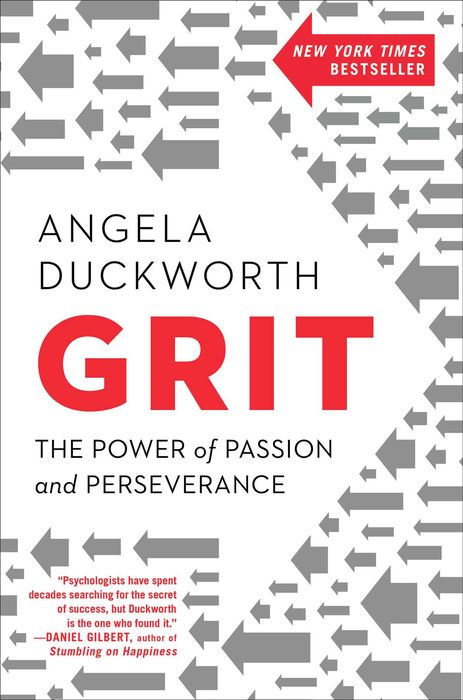
Her work culminated in the publication of her book GRIT: The Power of Passion and Perseverance — a #1 New York Times bestseller, with over a million copies sold and translated into more than 35 languages.
Have districts put it to work?
Not yet.
It is now 2026, ten years after the publication of her book, and the school system remains as it was. The lessons of GRIT are still waiting to be put into practice.
This is a matter of how the school system is run — not of how hard teachers work.
Putting it to work would require the school system to shift its priority away from follow the schedule, next lesson — and that means the new priority of the Lead Out Method:
Getting students inside what they need to succeed.