
Taylor's method in Production
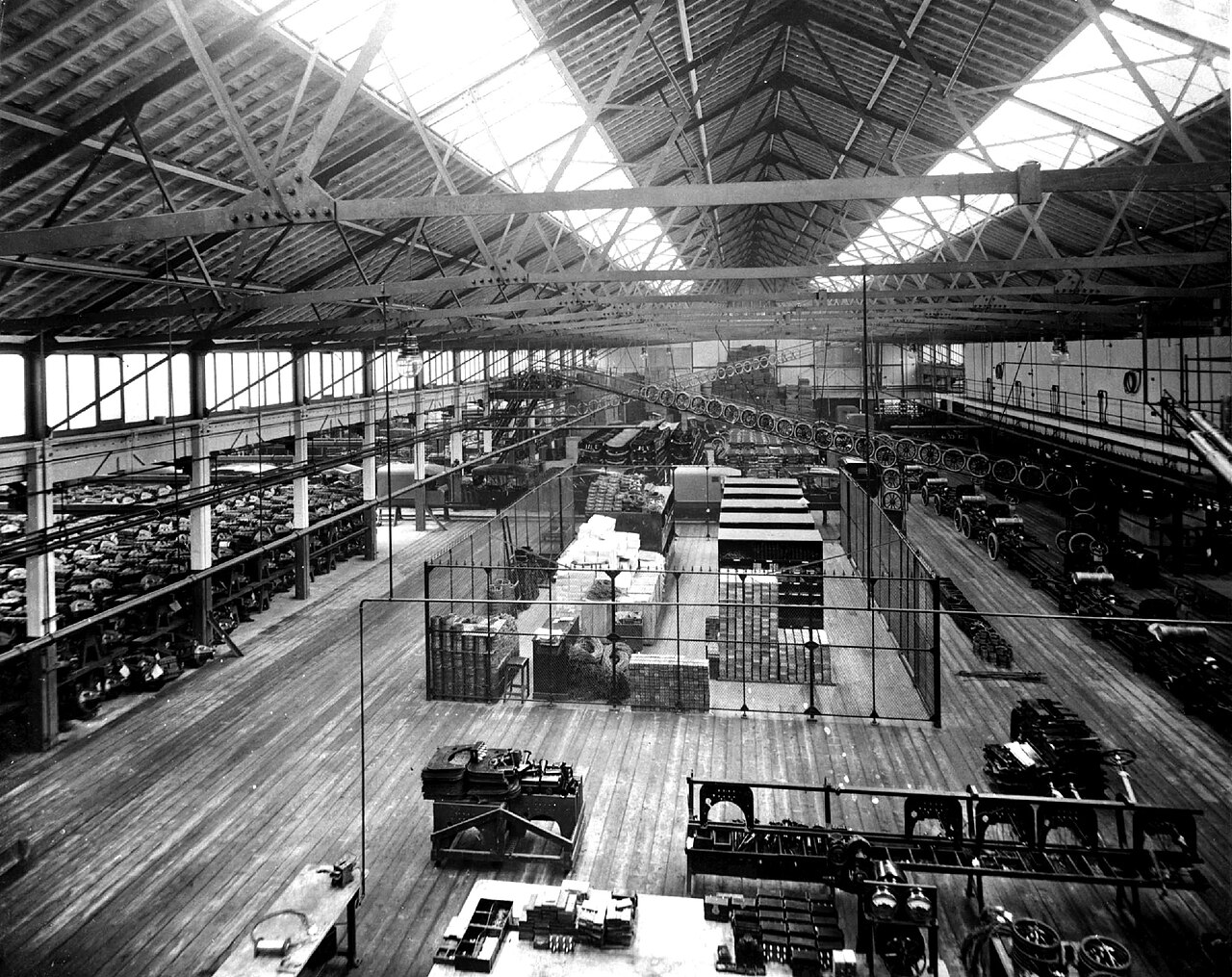
People wanted (for example) Model T cars, that were inexpensive to buy and reliable to run.
And so Ford Motor Co:
- built factories,
- hired hundreds of workers, and
- wanted one Model T after another to emerge, ready to start.
The Production Problem
We call this the problem of the-one and the-many in production.
If one person slows down on the line, the-many workers on the line slow down.
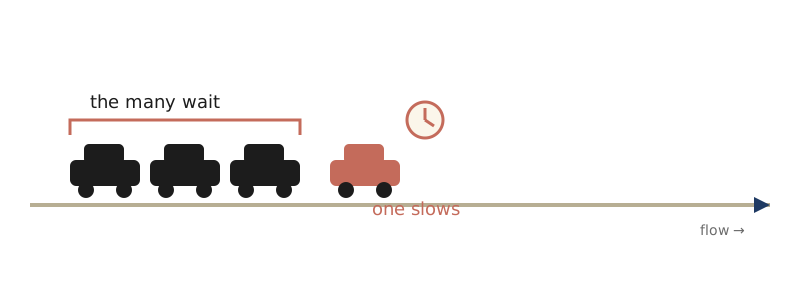
That is a big problem.
On the other hand, if no one slows down to fix a defect, now maybe the Model T doesn't start.
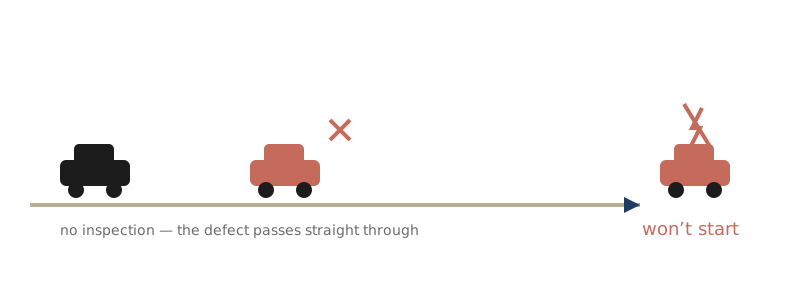
That is another big problem.
And it seems like a very difficult problem:
If one stops to fix a defect, the whole line slows down.
But if one does not stop to fix a defect, then coming off the line, maybe the car won't start.
Enter Frederick Winslow Taylor and his method, Scientific Management.
As you see Taylor's solution, you'll already start recognizing today's school system.
Taylor's brilliant idea.
Taylor inserts a new task — a test — into the production line.
It's just another task.
It does not slow down the line.
Here is why that is so brilliant
If a car fails inspection:
- The car is repaired off to the side — so no one slows down the line.
- The repaired car is then fed back into the line (that no one slows down).
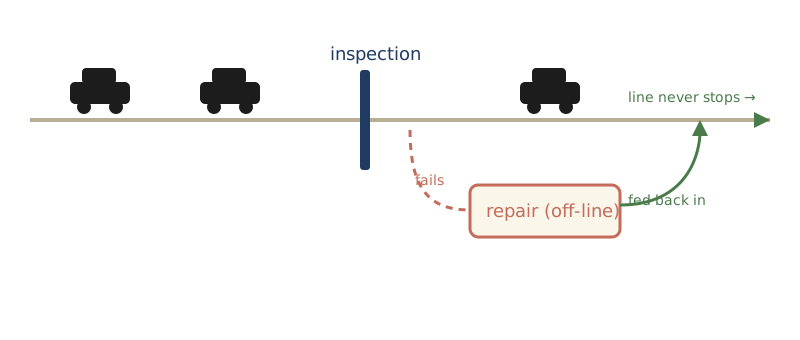
Do you see?
Now everyone keeps working efficiently;
and no one slows down the line!
Taylor's method broken down into steps
- Design the Model T.
- Central Planning plans
- Plans a schedule of tasks for each production worker to do.
- Uses Time & Motion Studies to determine the “one best way” to do each task.
- Designs the periodic inspections (tests).
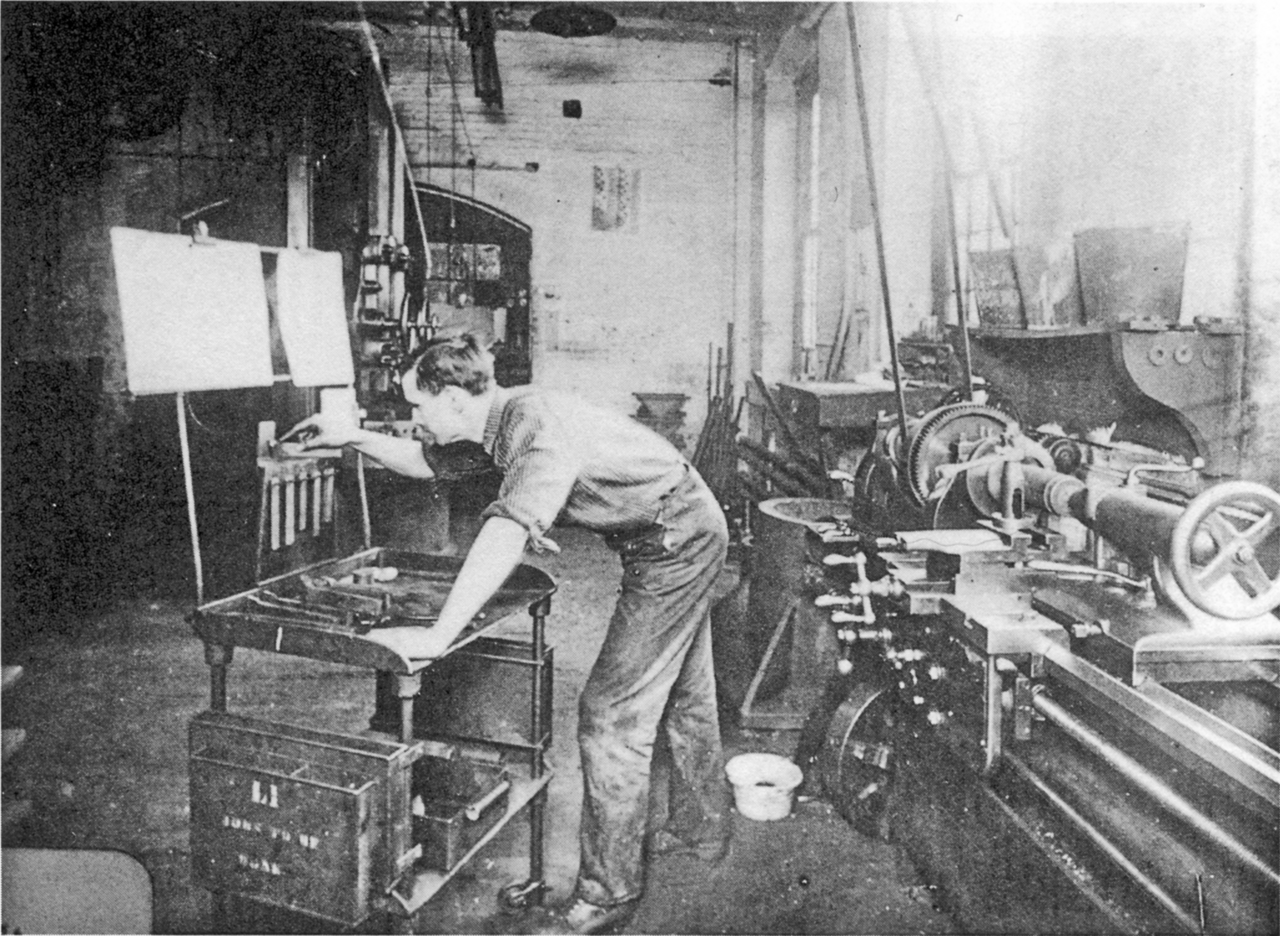
- Production supervisors — Teachers.
Yes, Taylor called supervisors teachers. They have two jobs:
- Teach workers to do their tasks the “one best way”; and
- Above all, make sure everyone follows the schedule — next task — no matter what.
The Stakes
If Taylor's method failed, then either efficiency or quality would suffer.
But if it succeeded, high-quality cars could be sold at a low price because of the high efficiency.
Spectacular success
At Ford, the results were staggering.
- Assembling a Model T once took about 12½ hours. By early 1914 the moving line had cut that to about 93 minutes.
- The price fell from $850 in 1908 to $490 by 1914, and down to $260 by 1924.
- From 1908 to 1927, Ford built more than 15 million Model Ts.
Higher quality. Higher efficiency. A far lower price for the buyer — exactly as promised.
Sources: The Henry Ford; Ford Motor Company corporate history; Library of Congress.
Taylor's success was a call to action for every manufacturer worldwide.
It wasn't possible to compete without achieving the same high quality with simultaneously low costs.
And, Taylor's success was a call to action to school districts nationwide.
It wasn't possible to withstand the pressure applied by business leaders.
In 1913, for an annual meeting of superintendents, as described in Education and the Cult of Efficiency:
…1912 had been a trying year.
They had received enough criticism and advice to last a lifetime.
The question asked eagerly of each other was: “What is to be done?”
…they were most expectant about the session devoted to scientific management,
for, after all, if this new system could work such miracles in industry, perhaps it could help solve their problems in education.
Besides, they had been advised, urged, and even warned by businessmen and by some of their leaders to use the new panacea.
— Raymond E. Callahan, Education and the Cult of Efficiency, p. 65 (ch. “American Educators Apply the Great Panacea”)
And so, beginning in 1913, Taylor's method was applied to public schooling.
Now we can see clearly, exactly what the school system is — a production method — and exactly why it cannot work in education.
See for yourself. Education →