
Science catching up to The Beautiful Problem
Long before the science explained why, great educators like Eva Fugitt and Marva Collins achieved spectacular results.
Now the science has caught up.
Bottom line — science validates that:
- To succeed outside in school and life, inner abilities are more important than talent.
- The brain is plastic. Inner abilities can be developed.
- Wellness is not just the absence of illness, but the positive presence of various attributes — which students can build when led through Inner Educational Exercises.
- Learning motivation is activated as students become able to self-direct their focus and attention more independently.
They succeeded without the science
— science that only became available decades later.
Eva Fugitt and Marva Collins didn’t have brain scans or peer-reviewed trials to lean on. They simply solved The Beautiful Problem: how to get inside what students need to succeed — at school and in real life.
The science doesn’t take the credit. It just does something lovely: it explains why solving The Beautiful Problem works so well. Below are four of the most hopeful findings.

Neuroplasticity — a whole lot of hope
For a long time people believed the brain was more or less fixed — that you were either “a math person” or you weren’t. It turns out that’s simply not true, and the truth is far kinder.
The brain keeps growing, adapting, and rewiring itself all through life. For any student who’s ever felt stuck, that is genuinely wonderful news.
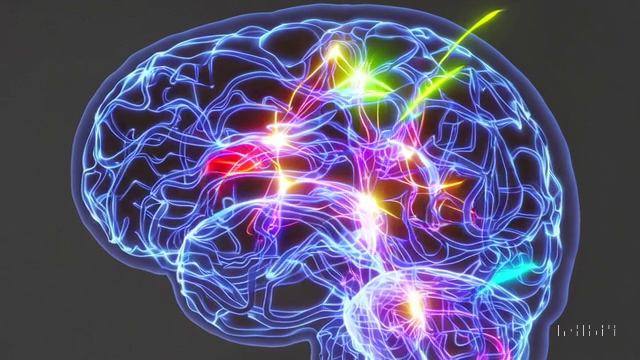
As Psychology Today puts it:
Neuroplasticity is the brain’s capacity to continue growing and evolving in response to life experiences.
The importance of neuroplasticity can’t be overstated: It means that it is possible to change dysfunctional patterns of thinking and behaving and to develop new mindsets, new memories, new skills, and new abilities.
Read that second line again. New mindsets, new skills, new abilities. That’s not a motivational poster — it’s how the brain actually works, and it’s exactly what a good education is meant to draw out.
Source: “Neuroplasticity,” Psychology Today — psychologytoday.com/us/basics/neuroplasticity
To succeed outside in school and life, inner abilities are more important than talent.
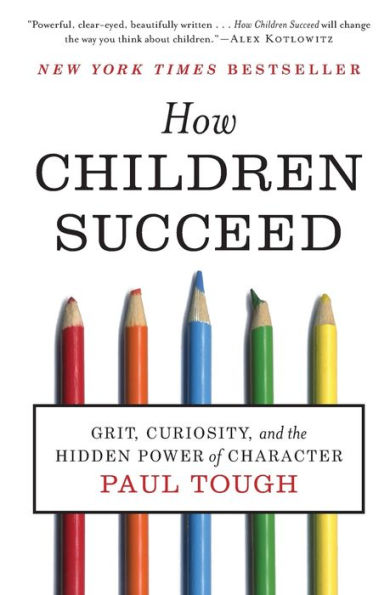
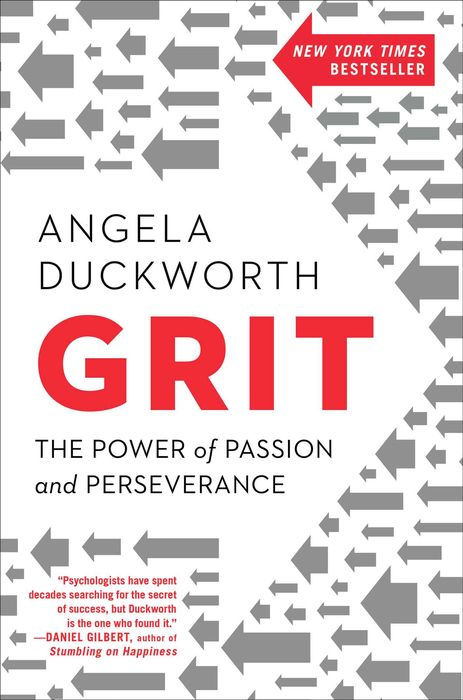
Paul Tough in How Children Succeed and Angela Duckworth in GRIT summarize decades of research validating how inner character, grit, passion & perseverance are more predictive of success than talent.
Positive Psychology — wellness is a presence, not just an absence
Here’s a quietly radical idea from modern psychology: being well is not merely the absence of what’s wrong. It’s the presence of something good.
Mental health is therefore best viewed as a complete state, i.e., not merely the absence of mental illness but also the presence of mental health.
That’s Professor Corey L. M. Keyes of Emory University, a foundational figure in positive psychology. His peer-reviewed work introduced the widely taught “Two Continua Model” — the idea that wellness and illness are two separate dimensions, not opposite ends of one line. So real wellness asks for the positive presence of emotional, psychological, and social well-being — not just the absence of symptoms.
For a classroom, that changes the whole goal. We’re not only trying to keep students out of trouble; we’re helping something good grow in them.
Source: Corey L. M. Keyes (2005), Mental Illness and/or Mental Health? Investigating Axioms of the Complete State Model of Health. Journal of Consulting and Clinical Psychology, 73(3), 539–548 — PubMed.
Keyes wasn’t the first to see it. The idea has deep roots:
Health is a state of complete physical, mental and social well-being and not merely the absence of disease or infirmity.
— World Health Organization, Constitution (1948)
And Martin Seligman, the founder of positive psychology, gives us a friendly map of what “present” wellness looks like — the PERMA model: Positive emotion, Engagement, Relationships, Meaning, and Accomplishment. Psychology, he argues, should study what makes life worth living, not only repair what’s broken.
The best part: wellness is trainable.
Researchers have tested dozens of small “inner” practices — what we call Inner Educational Exercises — that reliably build well-being. A few gentle, well-supported ones to start with:
- Three Good Things — each night, jot down three things that went well and your part in them. One of the most replicated boosts to well-being (Emmons & McCullough; Seligman).
- Savoring — pause on a good moment for 20–30 seconds and really take it in. Linked to higher life satisfaction (Bryant & Veroff).
- Self-compassion — treat yourself with the kindness you’d offer a friend. Tied to greater resilience and motivation (Kristin Neff).
- Slow breathing — a few minutes of longer exhales calms the body quickly (Huberman & Spiegel).
Pick two or three that appeal — consistency beats intensity. These build wellness; they’re not a substitute for professional care when it’s needed.
Sources: WHO Constitution (1948); Seligman, Flourish (PERMA); Two Continua Model overview — PMC; Dr. Corey Keyes on languishing & flourishing — LearningWell.
The science of learning motivation
Decades of research — from Edward Deci and Richard Ryan’s Self-Determination Theory to Daniel H. Pink’s bestseller Drive — point to three conditions that switch on our natural drive to learn:
- Autonomy — a real say in one’s own learning.
- Mastery — challenges in the sweet spot: not too hard, not too easy, with quick feedback.
- Purpose — a good reason to learn, and room for one’s own interests.
Here’s the piece that’s easy to miss.
Autonomy isn’t just something you hand a student — it’s something they have to be able to use. A child needs the inner skill to self-direct in order to use that autonomy to: choose, focus, and steer their own effort.
This is exactly what Inner Educational Exercises develop — the wise part within, the ability to actually use autonomy.
And notice how the three conditions lean on it:
- Without the ability to self-direct, a student can’t reach Mastery — they can’t find and hold challenges in their own learning zone.
- Without it, a student can’t bring in their own interests — so Purpose never really switches on.
That’s why the Column‑1 work of Educating — getting students inside what they need to succeed — makes it possible to grant the first link in a chain of three conditions — Autonomy, Mastery and Purpose — to motivate the Column‑2 work of Learning.
§
Want to meet the researchers behind all this? Their stories are worth your time: Daniel H. Pink on motivation, Paul Tough on character, and Angela Duckworth on perseverance — three paths, all arriving at the same hopeful place.