
The Journey of Paul Tough
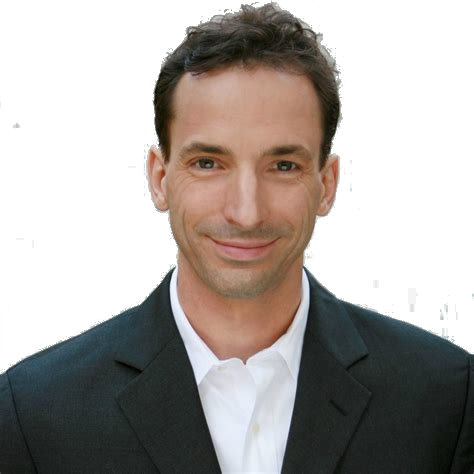
Mr Tough quit his job at the New York Times and spent three years in search of the answer to one question.
What makes the difference in children’s success?
Why do some succeed while others fail?
Mr Tough wanted to know
where to begin helping all students succeed.
And why is it that some children fail while others succeed?
The problem:
a false belief.
From Mr Tough’s book, How Children Succeed:
…what you might call the cognitive hypothesis: the belief, rarely expressed aloud but commonly held nonetheless, that success today depends primarily on cognitive skills — the kind of intelligence that gets measured on IQ tests,
including the abilities to recognize letters and words, to calculate, to detect patterns,
and that the best way to develop these skills is to practice them as much as possible, as early as possible.
While the idea of the preeminence of early education might be new, the idea of stuffing as much knowledge into students so they succeed — that idea is very old.
Guidance from many,
including Heckman, Duckworth and Seligman.
James Heckman
an economist at the University of Chicago
Since 2008, Heckman has been convening regular invitation-only conferences populated by equal numbers of economists and psychologists…
all engaged in one way or another with the same questions:
Which skills and traits lead to success?
How do they develop in childhood?
And what kind of interventions might help children do better?
Angela Duckworth
From angeladuckworth.com/about-angela
Angela Duckworth is the Rosa Lee and Egbert Chang Professor at the University of Pennsylvania and faculty co-director of the Penn-Wharton Behavior Change for Good Initiative.
A 2013 MacArthur Fellow, Angela has advised the World Bank, NBA and NFL teams, and Fortune 500 CEOs.
Martin Seligman
From ppc.sas.upenn.edu
Dr. Martin E.P. Seligman is the Director of the Penn Positive Psychology Center and Zellerbach Family Professor of Psychology in the Penn Department of Psychology. He is also Director of the Penn Master of Applied Positive Psychology program (MAPP).
He was elected President of the American Psychological Association (APA) in 1998, during which one of his presidential initiatives was the promotion of Positive Psychology as a field of scientific study. This initiative spurred a dramatic increase in empirical research on human well-being, and as a result there is now a deeper and broader base of science-based knowledge of human happiness and well-being. This knowledge has enabled the creation of practical interventions that demonstrably increase well-being, including interventions in positive education and positive psychotherapy. His primary aim as APA President was to bridge science and practice so both might flourish, a goal that has been paramount throughout his life as a psychologist. Since 2000 his main mission has been the promotion of the field of Positive Psychology.
He is a leading authority in the fields of Positive Psychology, resilience, learned helplessness, depression, optimism and pessimism. He is also a recognized expert on interventions that prevent depression, and build strengths and well-being. He has written more than 350 scholarly publications and 30 books.
Steps to success
1. Quit his job at the New York Times and spent 3 years studying the work of researchers — and the success of teachers and coaches.
2. Made conscious the unconscious, commonly held (false) belief that student success is based on learning.
3. Summarized the key to success as non-cognitive functions such as executive function, persistence, grit and wellness — while noting the adversity created by ACE: Adverse Childhood Experiences.
The stakes
IF Mr Tough succeeded
THEN as a society we would know where to focus our efforts and schools would improve.
IF Mr Tough failed
THEN we would be left with an unanswered question, and still not know what matters for student success.
Did Mr Tough succeed?
Yes and no.
Mr Tough did discover — and, through stories and research, summarize — the key to success as something inside of students: what we here at Schoolio call what students inside need to succeed.
However, it is now 2026, fourteen years after the publication of his book, and the school system remains as it was.